Rzeszow
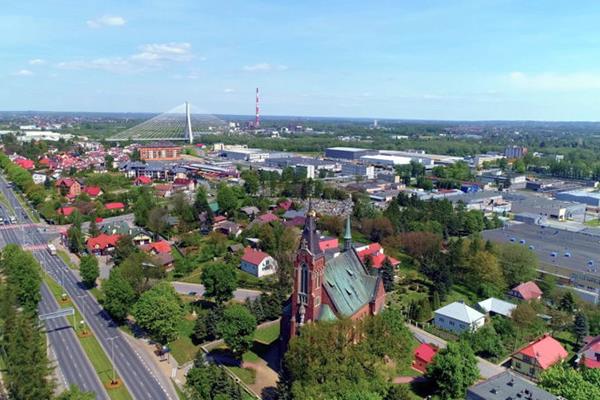
Rzeszów is a city in Poland and the administrative center of the Subcarpathian Voivodeship. The city is located on the banks of the Vistlok River. Rzeszow is an ancient city whose foundation dates back to the 14th century. It was then that the Polish kingdom seized the ancient city of Rzeszow which at that time was located on the left bank of the river. According to archaeologists and excavations the ancient city has existed on this site since about the 12th century.
The architecture of the historic city center is a building of the XIX - early XX centuries in the style of classicism, modernism, neo-Gothic, modernism and art deco. The oldest preserved building is the Gothic parish church of St. Wojciech and Stanislaw (1430).
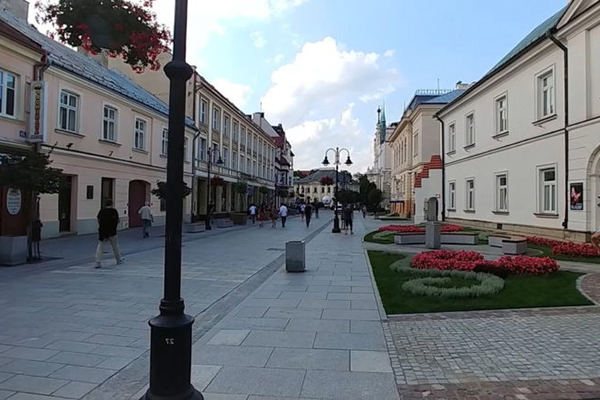
The main boulevard of the city - ul. May 3. It is the oldest and at the same time the most representative street of the city. It runs from church to castle. It is now pedestrian.
History
Rzeszów's history began in 1354 when Casimir the Great (King of Poland) gave the settlement city rights. Even then the first church and schools were built in the city. The city began to grow and develop rapidly. In the 16th century a town hall, a castle and a monastery were built here. In 1638 Rzeszow became the property of the Lubomirski family becoming an important trading center of southeastern Poland.
In the 18th century Rzeszow became part of the Habsburg Empire becoming the capital of the entire region. In 1845 it became a free city which gave great impetus to its further development. Already in 1858 a railway was laid in Rzeszow; in 1888 the first lines of telephone appeared. A little later plants and factories began to be built.
The end of the Austrian monarchy contributed to the growth of the movement towards the independence of Poland. After Poland gained independence Rzeszow's value continued to grow. The city developed dynamically before the Second World War. During the war the Nazis created a ghetto in Rzeszow which operated until July 1942. The city was liberated from German occupation by the Red Army in August 1944.
In August 1944 the city of Rzeszow became the administrative center of the region. After the war factories, an airport and educational establishments were built and modernized here. Rzeszów became the largest transport hub of southeastern Poland. At this time it is also a major industrial and economic center of the region.
Sights
The main attractions of Rzeszów are the castle of the same name, the old town hall on the market square, the church of St. Wojciech and the Lubomirski Palace. There are also two theaters and a large museum.
Market Square is the central square of the city. There are many shops and cafes and numerous cultural events. Market Square has found its present appearance since the middle of the 19th century after the fire. The dominant structure of the market is the town hall. There was a bell on its tower in the seventeenth century the blow of which announced the beginning of bidding and their end.
Rzeszow Castle or Rzeszow Castle is one of the main sights of the city built in 1902-1906 on the site of the ancient Lubomirski Castle. The court is now located here and until 1981 imprisoned. The first defensive fortress was built on this site in the 16th century. The Old Castle was demolished in the early 20th century because of its very poor condition.
Church of St. Wojciech and St. Stanislav is a lighthouse church located in the center of the Old Town at the intersection of May 3 and Kosciuszko. It is the oldest building in Rzeszów whose history begins almost from the moment of its foundation in 1363. Three nave church, gothic presbytery and main baroque nave. Next to the church is a 30.5 m Baroque bell tower covered with a dome and topped with an angelic spire. Church interior - 18th century.
The Old Synagogue is a synagogue located on Bożniczej Street 4. It is now one of the oldest preserved synagogues in the Podkarpackie Voivodeship. It was built in 1610. The building of the synagogue is made in the form of a square in the Renaissance style. In the northeast corner is a small eaves-shaped tower which is now the only trace of the city's defensive structures.
On the west side there is a 2-storey annexed building dating from the middle of the 19th century which was originally topped by Attica and overlappings. In its interior there is a rectangular vestibule on the first floor and above it on the second floor is the Lyubomirsky
Summer Palace - an old, late Baroque style residence with rococo elements located on Lubomirski avenue in Rzeszów just outside the castle. It was built in the 90s of the XVII century in the territory of the former vineyard.
The old cemetery is the oldest necropolis of the city. The area of the cemetery is 3.65 ha. It is located between the streets of Rynok and the river Wisłok. It is estimated that about 40,000 people are buried here