Copenhagen
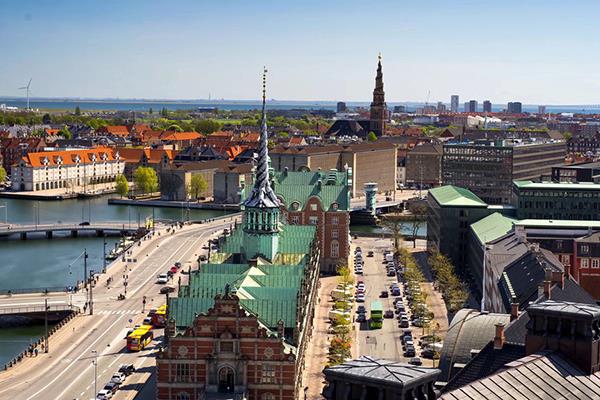
Copenhagen is the capital of Denmark and its largest city. It is located in the western part of the country on the islands of Zealand, Slotsholmen and Amager with a view on the Eresund Strait. Copenhagen is one of the most beautiful cities in Europe that connects Scandinavia and Europe geographically and culturally. Probably the most tranquil of the Scandinavian capitals which will impress with a charming provincial charm wonderful sea atmosphere and world-class landmarks. Copenhagen is a place where old fairy tales coexist with modernity and warm jazz mixes with cold electronics.
Once in the 11th century a small fishing village was located on the site of the future capital of Denmark. Later on thanks to maritime trade and fishing a rich city and a large port grew here.
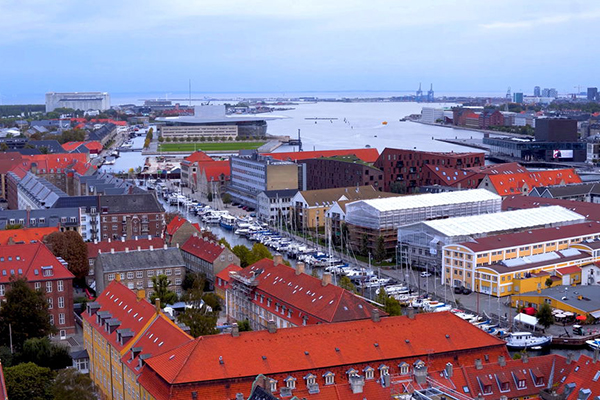
Particularly the port atmosphere is felt in New Harbor filled with vibrant merchant houses, boats and ships. Copenhagen is now one of the major financial and cultural centers of Northern Europe. The city is famous for friendly locals, interesting street and night life, unique food culture, beautiful historical architecture, many palaces, ancient churches and museums.

History
In the 11th - 12th centuries Copenhagen was a small fishing village. That changed in 1160 when King Waldemar transferred control of the settlement to Archbishop Roskill Absalon. This influential churchman built a castle here (on Slotsholmen Island) and laid the foundations for the city's future prosperity.
In 1254 Copenhagen received city privileges. In 1416, the city was conquered by King Eric Pomeransky who made it his residence. Due to its advantageous strategic location (on the shores of the important Eresund Strait) Copenhagen and the fishery industry grew up. But not all the wealth and status of the new city tasted good. During the Middle Ages Copenhagen was plundered and ravaged several times. The Hanseatic League once completely destroyed the city.
After the Reformation the Danish king finally moved the capital of the Kingdom to Copenhagen. New fortifications and many buildings were built. In the mid-17th century Copenhagen withstood the Swedish siege. In 1728 a severe fire destroyed 25% of the city. In the early 19th century Copenhagen was greatly damaged by an English squadron under the command of Admiral Nelson. In contrast the 19th century is considered the golden age for Copenhagen.
In the 19th century most of the old fortifications were dismantled. By the 20th century, Copenhagen had become a thriving industrial city. The capital of Denmark was virtually unaffected during the two world wars. And today Copenhagen is considered one of the most comfortable cities to live in.
How to get there
Copenhagen International Airport is called Kastrup and is located on Amager Island. Many passengers find it much more convenient and functional than for example London Heathrow or Frankfurt Airport. The airport serves the following destinations: Milan, Hamburg, Berlin, Paris, London, Stockholm, Helsinki, Amsterdam, Budapest, Geneva, Vienna, Warsaw and several intercontinental flights. From the airport to the city center it is convenient to get to the subway. Trains run every 4 minutes and take 12 - 14 minutes.
Copenhagen has excellent rail and bus connections with most cities in Denmark as well as Malmö, Gothenburg, Lund, Hamburg, Berlin, Gdansk. The Danish capital also has a regular ferry service to Oslo.
Sights
The Little Mermaid is one of the symbols of Copenhagen. This Bronze Statue is located on the pier of Langelinie and is dedicated to the heroine of the famous K. Andersen's fairy tale. The sculpture created by E. Eriksen, was unveiled on August 23, 1913 and became a gift from the Danish brewer Karl Jacobsen to the city of Copenhagen.
The sculpture is made of bronze and granite and is inspired by Andersen's tale of a mermaid who throws everything for the love of the young prince. Every morning and evening she emerges from the abyss of the sea and sitting on a rock stares longingly at the shore hoping to see her lover.
The Copenhagen Town Hall is located on the square and was built between 1892 and 1905. The building is a combination of Italian Renaissance and medieval Danish architecture. The 106-meter-tall tower is the tallest in the city. Above the main entrance you can see the figure of Bishop Absalon who actually founded Copenhagen.
The town hall is very decorated with sculptures and paintings. The Rundetårn Tower is one of Copenhagen's most famous structures. The building was built in the 17th century as an observatory. The tower is 36 meters high and is still used by amateur astronomers.
Tivoli is one of the most famous amusement parks in Europe including more than 20 attractions: roller coasters, carousels, mirrors, theaters and more. Tivoli Park was founded in 1843 and became a real national heritage. He was visited several times by the Andersen storyteller and Walt Disney himself found inspiration here for his own world. Tivoli is a beautiful landscape with exotic architecture, historic buildings and lush gardens. At night thousands of colorful lights create a completely unique fairytale atmosphere here.
Geography and climate
Copenhagen is located in the west of Denmark on the islands of Zealand, Slotsholm and Amager. The Öresund Strait separates the Danish capital from Sweden. Copenhagen's climate is temperate. Summer is relatively cool and rainy. The winter is quite mild with low temperatures and unstable snow cover.